The Platform (1958)
it's the hope that kills you
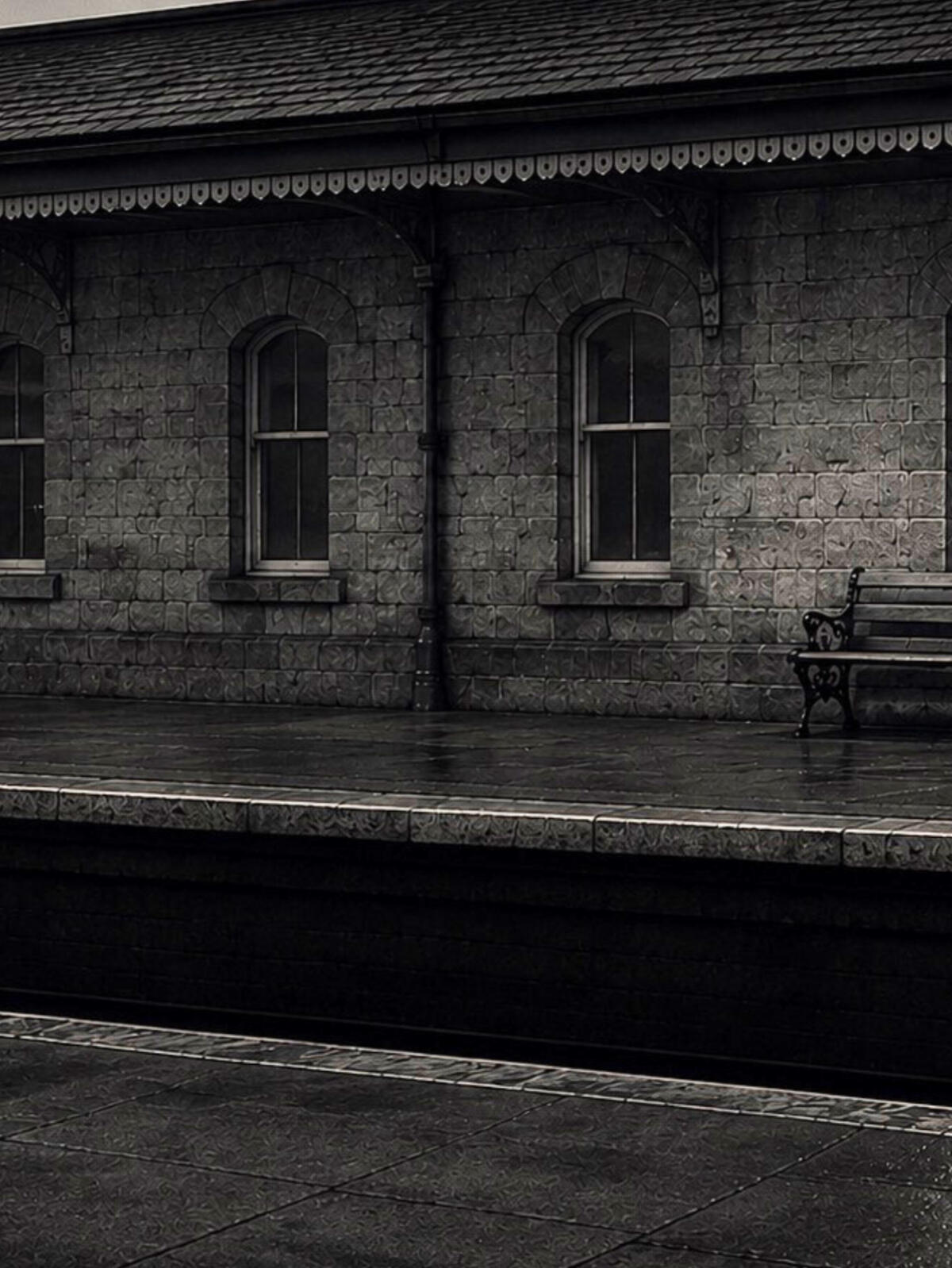
Released in 1958, The Platform was built around a simple question: how long can a person wait before waiting becomes the whole of their life? Set almost entirely on a small northern railway platform, the film followed a group of passengers expecting the same train, although nobody seemed entirely certain when (or whether) it was due to arrive.The hours passed through small observations and minor interruptions. A man repeatedly checked his watch, a woman rearranged the contents of her handbag and two strangers argued quietly about whether the station clock was working. Occasionally, a distant whistle or movement on the line suggested that something might happen, but each possibility dissolved into another period of silence.Deliberately uneventful, The Platform found tension in repetition. Conversations began and stopped, passengers changed seats, the rain continued and the empty track remained stubbornly unchanged. The film’s long static shots and careful attention to ordinary sounds turned a familiar station into a study of indecision, boredom and the strange hope that keeps people waiting long after they have stopped believing they are going anywhere.
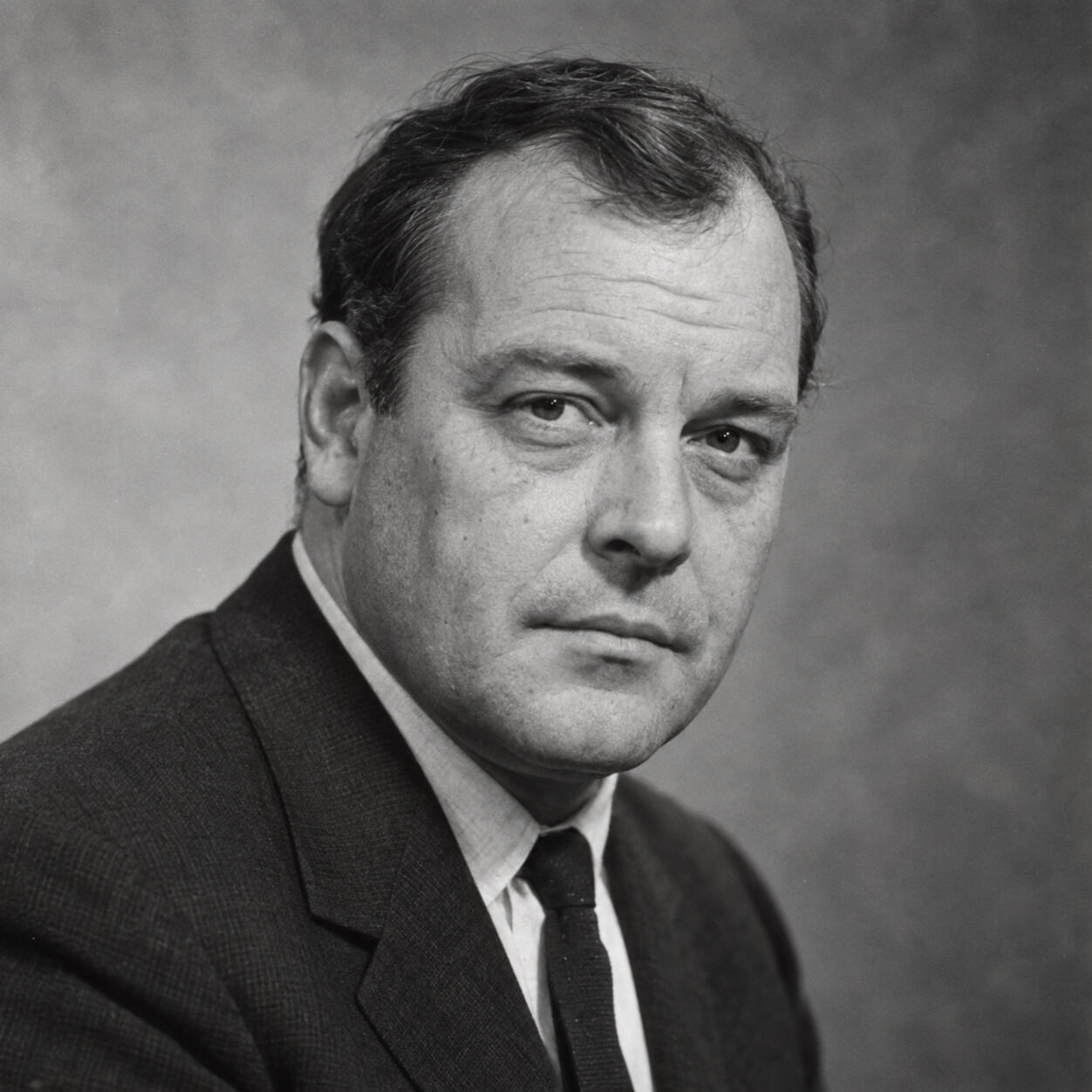
Albert “Bert” Hargreaves (1925–1996)Born in Littleborough, Bert Hargreaves worked briefly as a railway porter before joining a travelling repertory company in the late 1940s.His ordinary appearance and restrained delivery made him well suited to parts involving working men, clerks and characters who kept their thoughts to themselves.In The Platform, Hargreaves played Arthur Naylor, a quiet traveller waiting for a train that may already have been cancelled. He carried much of the film through silence, repetition and small changes in expression, making Arthur’s growing uncertainty more compelling than any conventional dramatic performance.Hargreaves continued to work in television and regional theatre throughout the 1960s and 1970s, although he never became a major star.He was remembered by colleagues as patient, dryly funny and almost unnervingly calm - qualities that made him the ideal actor for a film about waiting.One of his more unusual claims was that he had invented the word “cool” in the sense of meaning stylish.
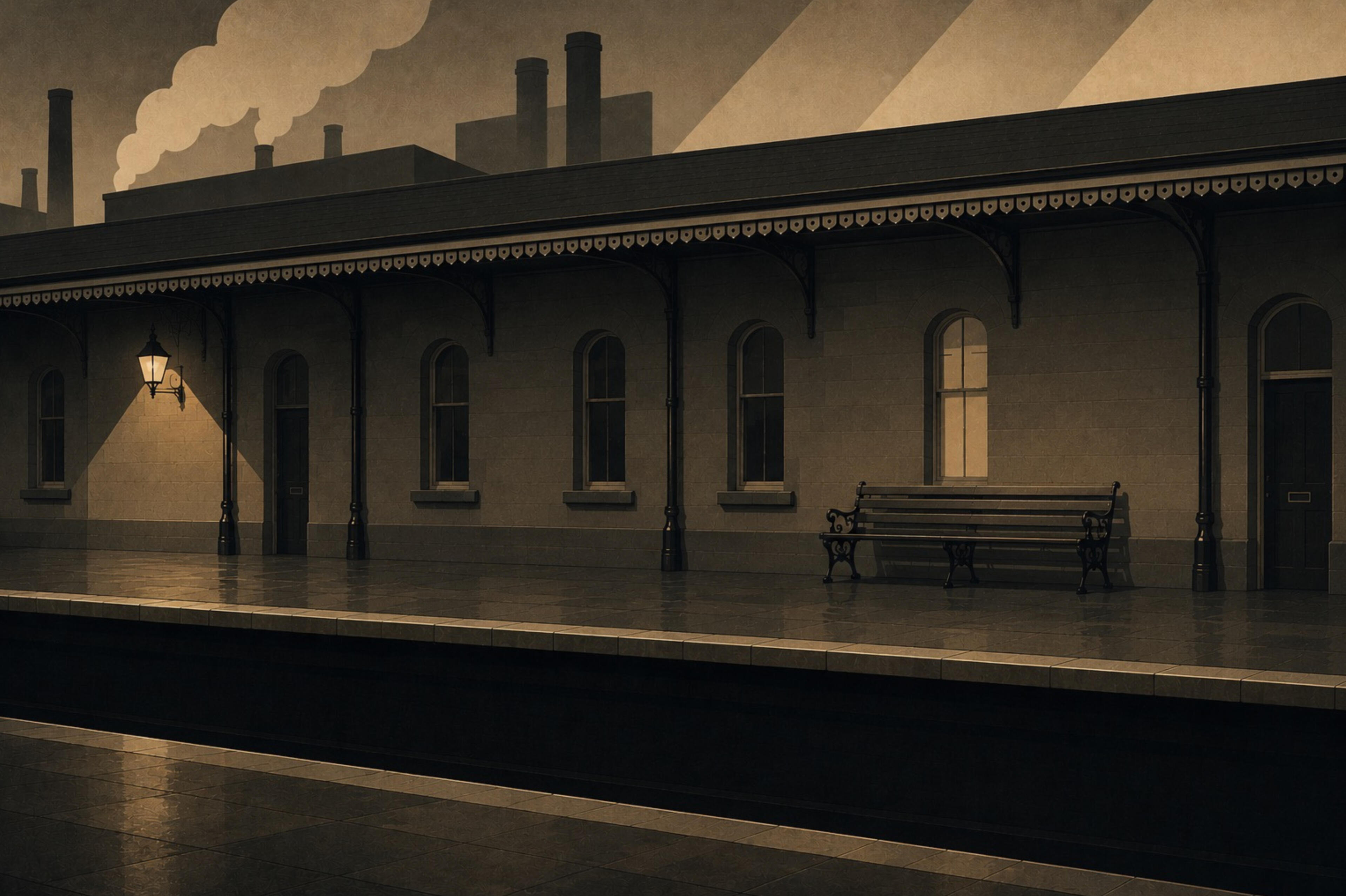
The Platform transforms a quiet northern railway station into a study of repetition, symmetry and suspended time.The long stone façade, evenly spaced windows, empty bench and dark channel of the tracks are arranged as a sequence of strong horizontal and vertical forms, giving the scene the controlled structure of Northern Deco.A restrained palette of charcoal, slate and wet black stone is broken only by the pale platform edge and reflected light on the paving.The absence of passengers makes the architecture feel almost theatrical, as though the station has been waiting long before the film began. It is a print about stillness, routine and the uneasy space between departure and arrival.Available exclusively through FCSF, this artistic interpretation is available unframed on 240 gsm art paper and measures 16 x 20 inches.
What did the critics think?
Critics largely disliked The Platform on its release. Several reviewers objected to its deliberate pace and lack of conventional drama, with the Northern Evening News describing it as “ninety minutes of damp stone, delayed trains and people refusing to go home.”The Leeds Chronicle was even less forgiving, calling it “a film in which nothing happens, slowly.”One critic walked out before the final reel, while another complained that the leading performance contained “less movement than the station clock.”A small number of reviewers defended its patience and austere visual style, but their voices were largely drowned out by the hostility.Only years later did The Platform begin to attract interest as an unusually severe and influential example of northern modernism.
From the archive
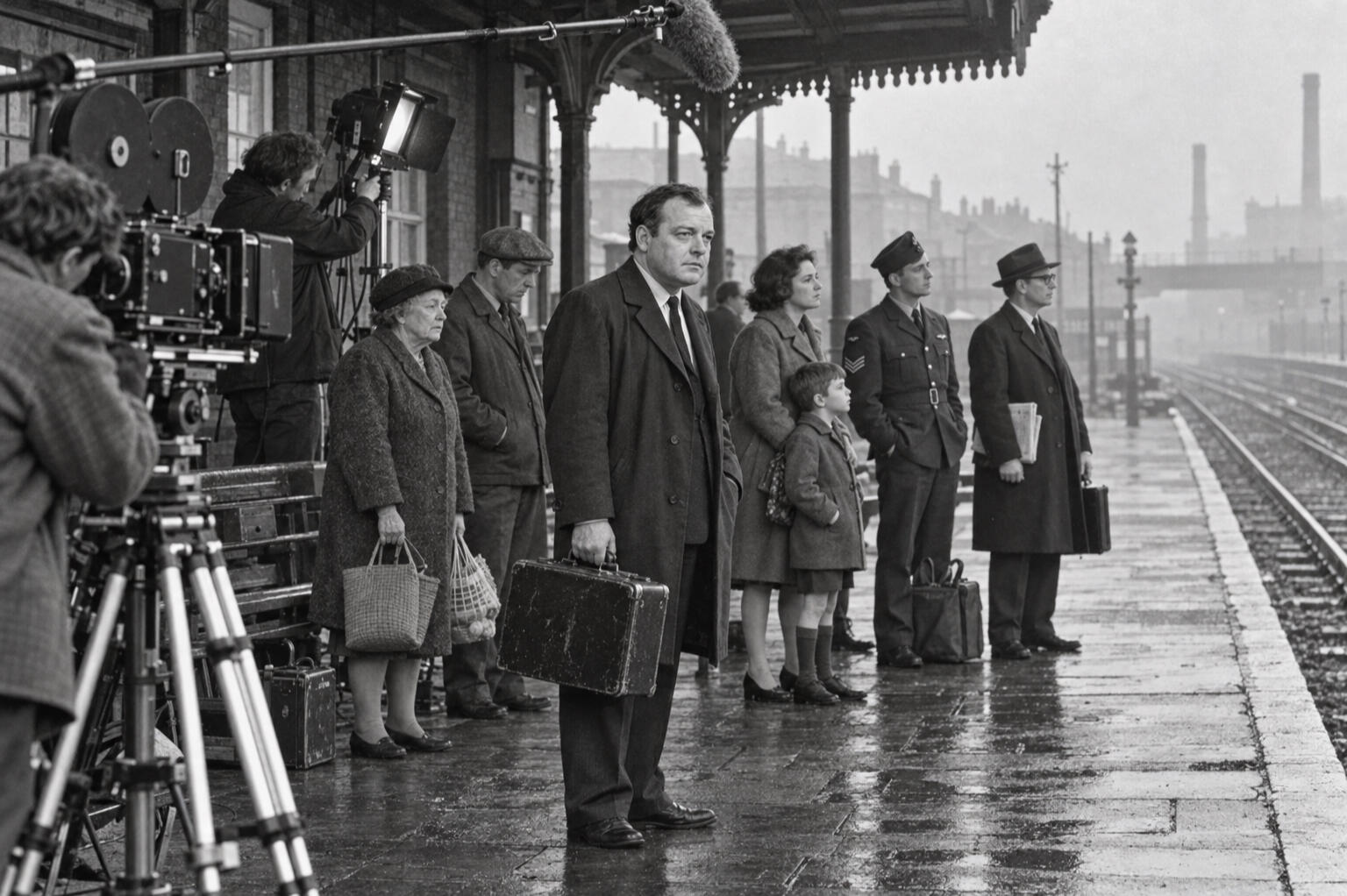
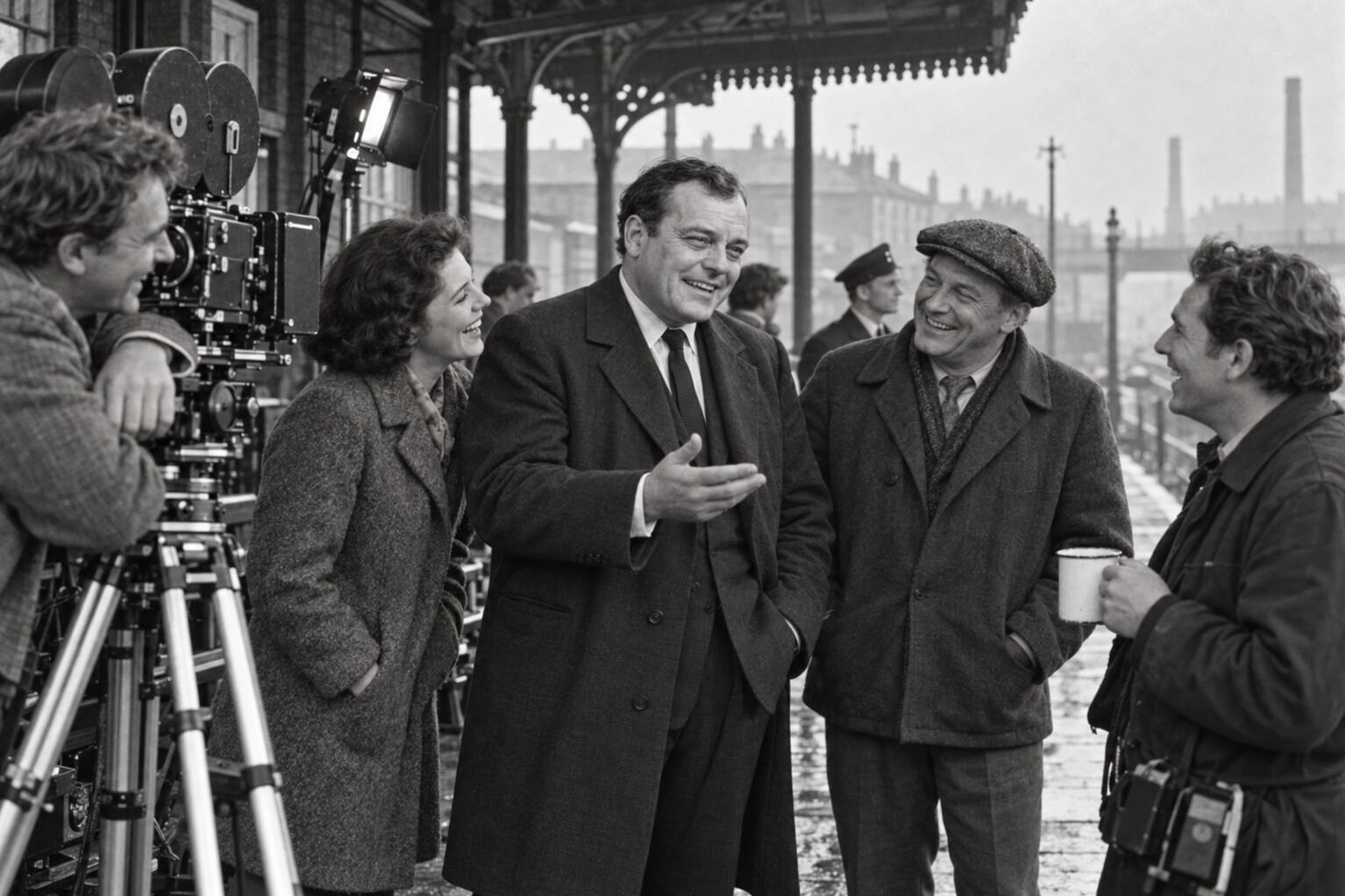
The surviving archive for The Platform contains little traditional publicity material. The production files are dominated by railway timetables, weather reports and daily continuity notes recording the exact position of the bench, the station clock and the puddles on the platform.Several pages of correspondence concern the film’s unusually limited action. One frustrated distributor asked whether a train would appear “at some point before the conclusion.” The director’s reply was simply: “That depends how long you are prepared to wait.”A small collection of production stills shows the platform empty at different times of day, with almost no visible change between them.
Publicity shot from the archive
The artwork of Reg Baines
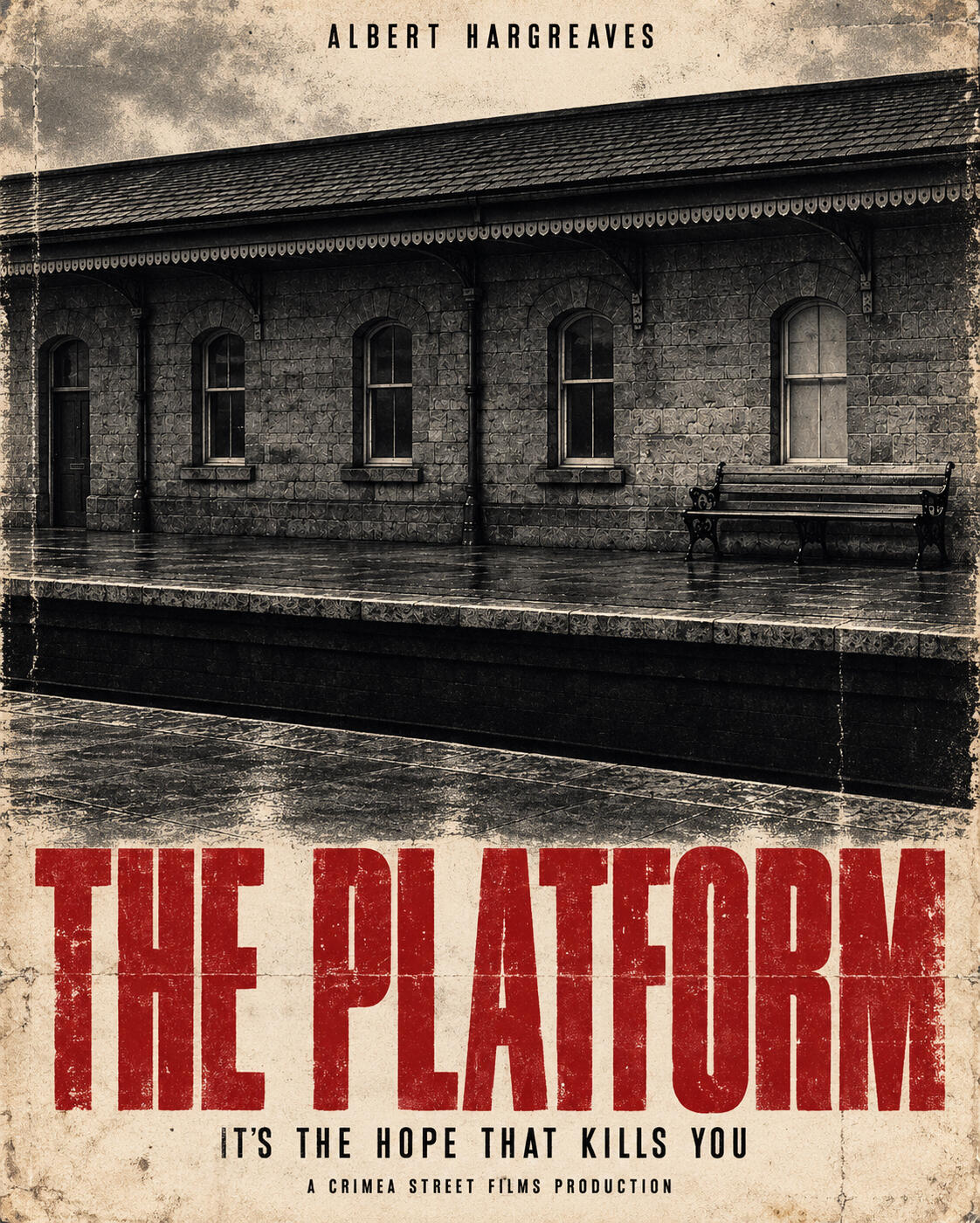
The original posters created by Reg Baines are synonymous with the studio and are very much part of its history.They would have been seen throughout the North of England outside cinemas, on hoardings and in places such as train stations.Most of them were damaged in a fire at the studio in late 1966, but we are delighted to now work with Parbold based artist, Brian Astley.He has faithfully reproduced each poster to a standard that our Reg would have been proud of and each one is available unframed on 240 gsm art paper as a 16 x 20 inch homage to the films we celebrate.